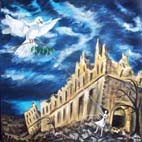
by Kay de Lautour (December 2011) for Cittadino Globale Global Citizen,
YAP (Youth Action for Peace, Italy).
Just as the most talented artists are often employed by advertising agencies, working to a formula and thereby denying the world the full benefit of their creative abilities, so the most talented tacticians are often employed by governments and the military, working for power and control over others. Would they make a greater contribution if employed elsewhere? Fundamental to the system which gives greater reward to our best brains and talents in warfare, business, commerce and politics is the belief that wealth and control equal success. Recent research suggests that this position needs review.
In their book “The Spirit Level; Why Equality is Better for Everyone” Wilkinson and Pickett provide significant evidence that an equal distribution of wealth and assets in fact benefits all sectors of society. Thus if we are to benefit individually, nationally, and globally, it makes sense to use the best talent and minds available to promote equality ahead of supremacy, altruism ahead of greed, peace ahead of war.
John Foster Dulles, a former USA Secretary of state, said at the end of the war: "The world will never have lasting peace as long as men reserve for war their finest human qualities. Peace, no less than war, requires idealism, self-sacrifice, and a righteous and dynamic faith".
How can that be achieved? What does idealism, self-sacrifice, and a righteous and dynamic faith look like? The works of people like Florence Nightingale, Mother Teresa, Gandhi and Martin Luther King Jr come to mind. Nightingale gave up her privileged life and chose to remain single to dedicate her life to improving medical standards, following her ideals. Mother Teresa similarly felt called to serve the poor, hungry and homeless, seeking nothing for herself. Gandhi, reverred for his non-violent activism, was prepared to make the ultimate sacrifice for peace. His birthday is marked by the International Day of Non-Violence. Martin Luther King Jr displayed a righteous and dynamic faith in his civil rights activism.
For most of us, however, such dedication requires a commitment too great for modern family and working life. Perhaps it is more useful to look at how humanitarian worker Paul Hewson (Bono of U2) uses his talents to bring awareness and change. Believing that Music can change the world because it can change people, he built his beliefs and his desire to make a difference into his career as a rock musician. Pop music often tells you everything is OK, while rock music tells you that it’s not OK, but you can change it. His beliefs are simply expressed: "To be one, to be united is a great thing. But to respect the right to be different is maybe even greater". Bono continues to work for change through music and political activism, and moves easily between busking on the streets for charity (Dublin, 24 December 2011) to talking with heads of state about “a wide range of issues”.
Where do you, the reader, stand as an individual interested in world peace? Are you active, proactive, reactive, or a bystander? Too often the task looks too big; the effort needed is too great, it is much easier to use empty words, placebos, but in reality do nothing. The oft-quoted maxim "All that is necessary for evil to triumph is for good men to do nothing" warns us that this is not enough. So do we leave the work to our famous people, or take a stand as individuals, the mere mortals that we are?
We do love our famous people and our heroes. We teach our children about Superman, Spiderman, and the newer X-Men fighting to save humanity, acting for the greater good. We have a basic desire to be saved by our humanitarian super-powered figures, and also a willingness to leave all the important work to them. When faced with a difficult situation we can ask “what would Superman (or my real life hero) do?” That answer is a good guide to making a positive and humanitarian choice.
If this feels too far removed from our everyday lives we need to look closer to home. All around us in society are people who are unsung heroes. They are the people who make positive change at a local level. Identifying them is not always easy if they value their privacy and shy away from attention. Perhaps, after all, it is easier to choose a star to follow. Ask yourself honestly “who do I most want to be like?” and consider the choices that person makes.
The Equality Trust, an online-organisation based on the principles discussed in “The Spirit Level”, urges us to take action, beginning in our local areas. Mother Teresa brings it even closer to home. Her message for world peace is both simple and profound. On receiving the Nobel Peace Prize Mother Teresa was asked, "What can we do to promote world peace?" She replied "Go home and love your family". Similarly, Gandhi said "If we are to teach real peace in this world, and if we are to carry on a real war against war, we shall have to begin with the children". When we apply the Dulles quote to this task and bring to our families and communities our finest human qualities, then peace will be the winner.
YAP (Youth Action for Peace, Italy).
Just as the most talented artists are often employed by advertising agencies, working to a formula and thereby denying the world the full benefit of their creative abilities, so the most talented tacticians are often employed by governments and the military, working for power and control over others. Would they make a greater contribution if employed elsewhere? Fundamental to the system which gives greater reward to our best brains and talents in warfare, business, commerce and politics is the belief that wealth and control equal success. Recent research suggests that this position needs review.
In their book “The Spirit Level; Why Equality is Better for Everyone” Wilkinson and Pickett provide significant evidence that an equal distribution of wealth and assets in fact benefits all sectors of society. Thus if we are to benefit individually, nationally, and globally, it makes sense to use the best talent and minds available to promote equality ahead of supremacy, altruism ahead of greed, peace ahead of war.
John Foster Dulles, a former USA Secretary of state, said at the end of the war: "The world will never have lasting peace as long as men reserve for war their finest human qualities. Peace, no less than war, requires idealism, self-sacrifice, and a righteous and dynamic faith".
How can that be achieved? What does idealism, self-sacrifice, and a righteous and dynamic faith look like? The works of people like Florence Nightingale, Mother Teresa, Gandhi and Martin Luther King Jr come to mind. Nightingale gave up her privileged life and chose to remain single to dedicate her life to improving medical standards, following her ideals. Mother Teresa similarly felt called to serve the poor, hungry and homeless, seeking nothing for herself. Gandhi, reverred for his non-violent activism, was prepared to make the ultimate sacrifice for peace. His birthday is marked by the International Day of Non-Violence. Martin Luther King Jr displayed a righteous and dynamic faith in his civil rights activism.
For most of us, however, such dedication requires a commitment too great for modern family and working life. Perhaps it is more useful to look at how humanitarian worker Paul Hewson (Bono of U2) uses his talents to bring awareness and change. Believing that Music can change the world because it can change people, he built his beliefs and his desire to make a difference into his career as a rock musician. Pop music often tells you everything is OK, while rock music tells you that it’s not OK, but you can change it. His beliefs are simply expressed: "To be one, to be united is a great thing. But to respect the right to be different is maybe even greater". Bono continues to work for change through music and political activism, and moves easily between busking on the streets for charity (Dublin, 24 December 2011) to talking with heads of state about “a wide range of issues”.
Where do you, the reader, stand as an individual interested in world peace? Are you active, proactive, reactive, or a bystander? Too often the task looks too big; the effort needed is too great, it is much easier to use empty words, placebos, but in reality do nothing. The oft-quoted maxim "All that is necessary for evil to triumph is for good men to do nothing" warns us that this is not enough. So do we leave the work to our famous people, or take a stand as individuals, the mere mortals that we are?
We do love our famous people and our heroes. We teach our children about Superman, Spiderman, and the newer X-Men fighting to save humanity, acting for the greater good. We have a basic desire to be saved by our humanitarian super-powered figures, and also a willingness to leave all the important work to them. When faced with a difficult situation we can ask “what would Superman (or my real life hero) do?” That answer is a good guide to making a positive and humanitarian choice.
If this feels too far removed from our everyday lives we need to look closer to home. All around us in society are people who are unsung heroes. They are the people who make positive change at a local level. Identifying them is not always easy if they value their privacy and shy away from attention. Perhaps, after all, it is easier to choose a star to follow. Ask yourself honestly “who do I most want to be like?” and consider the choices that person makes.
The Equality Trust, an online-organisation based on the principles discussed in “The Spirit Level”, urges us to take action, beginning in our local areas. Mother Teresa brings it even closer to home. Her message for world peace is both simple and profound. On receiving the Nobel Peace Prize Mother Teresa was asked, "What can we do to promote world peace?" She replied "Go home and love your family". Similarly, Gandhi said "If we are to teach real peace in this world, and if we are to carry on a real war against war, we shall have to begin with the children". When we apply the Dulles quote to this task and bring to our families and communities our finest human qualities, then peace will be the winner.



 Posts
Posts


